
What We Found Inspecting 15 Tennis Courts
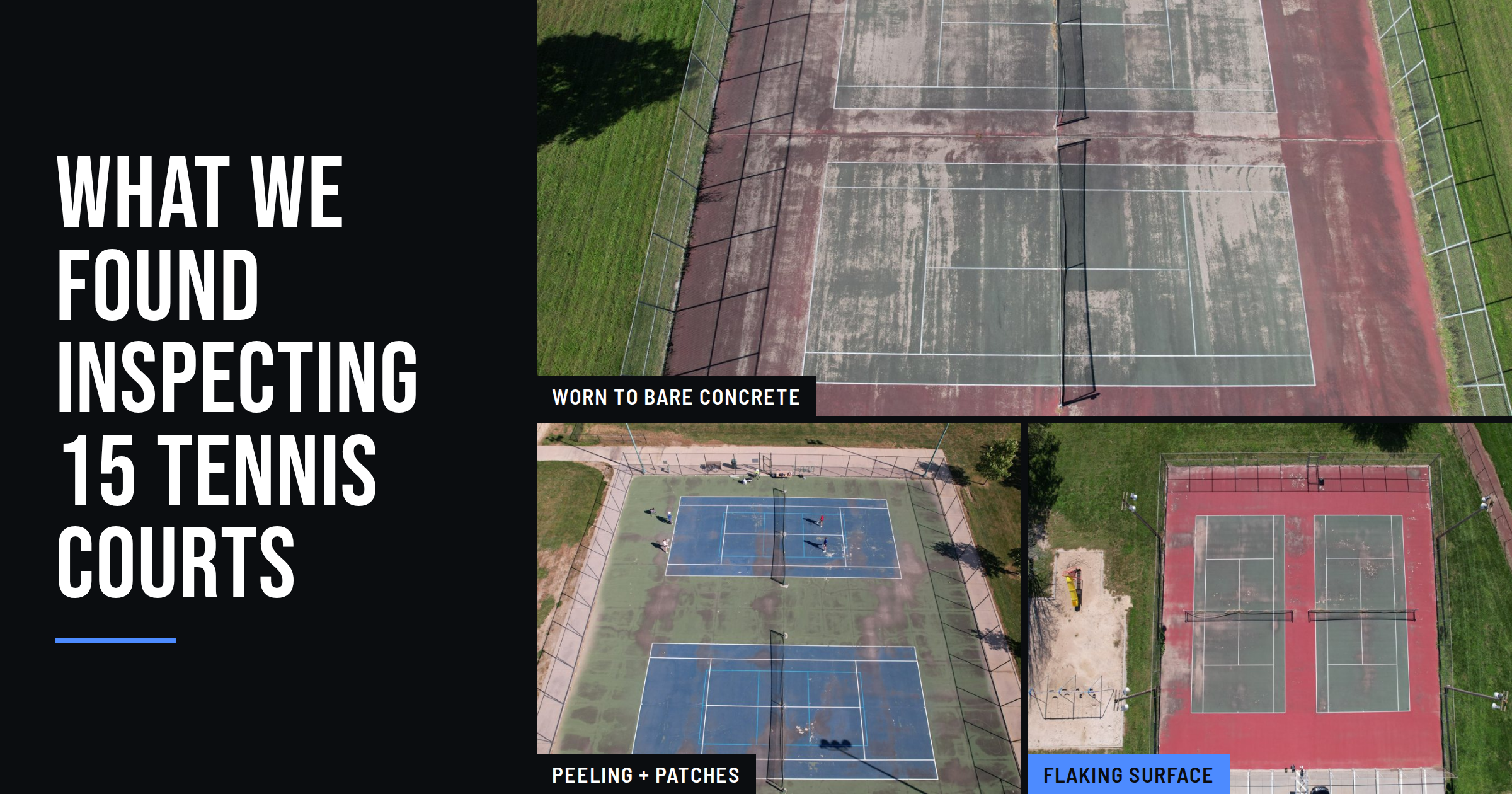
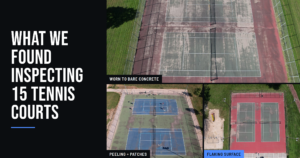
We recently walked 15 public tennis courts in Nebraska. We measured every court, flew the drone over each one, and took notes on everything from the slab to the net posts.
The grades ran from A- to C-. The surprising part: even the courts that had been resurfaced recently had problems hiding in plain sight. Here’s what we found, how each problem should have been handled from the start, and how to fix it now.
Why Were Net Posts the Most Common Problem?
Nearly every site needed new net posts. It was the single most common issue across all 15 courts.
- Heaved footings. At one park, a post footing had pushed up about 2 inches. Freeze and thaw does that when a footing isn’t set deep enough or water gets underneath.
- Leaning posts. At another site, the posts were leaning inward, pulling the net out of position.
- Rust. Several posts were rusted through at the base.
- Out of spec. Even where the posts looked fine, the net heights often weren’t right.
A bad net post affects play and serious players can tell. The solution? Remove the posts, repack the footings, and set new ones.
How it should be built: American Sports Builders Association (ASBA) guidelines call for net post footings to go below the frost line. In eastern Nebraska, that’s roughly 42 inches down (check your local code). Go shallower and the ground freezes under the footing, expands, and pushes the post up a little more every winter. That’s exactly how you end up with a post sitting 2 inches high.
A net post done right looks like this:
- A concrete footing set below frost depth, with the post in a ground sleeve so it can be swapped out later without breaking out the footing
- Posts set 3 feet outside the doubles sideline
- Net height of 42 inches at the posts and 36 inches at the center strap
- Galvanized or coated posts that won’t rust out at the base
What Causes Birdbaths on a Tennis Court?
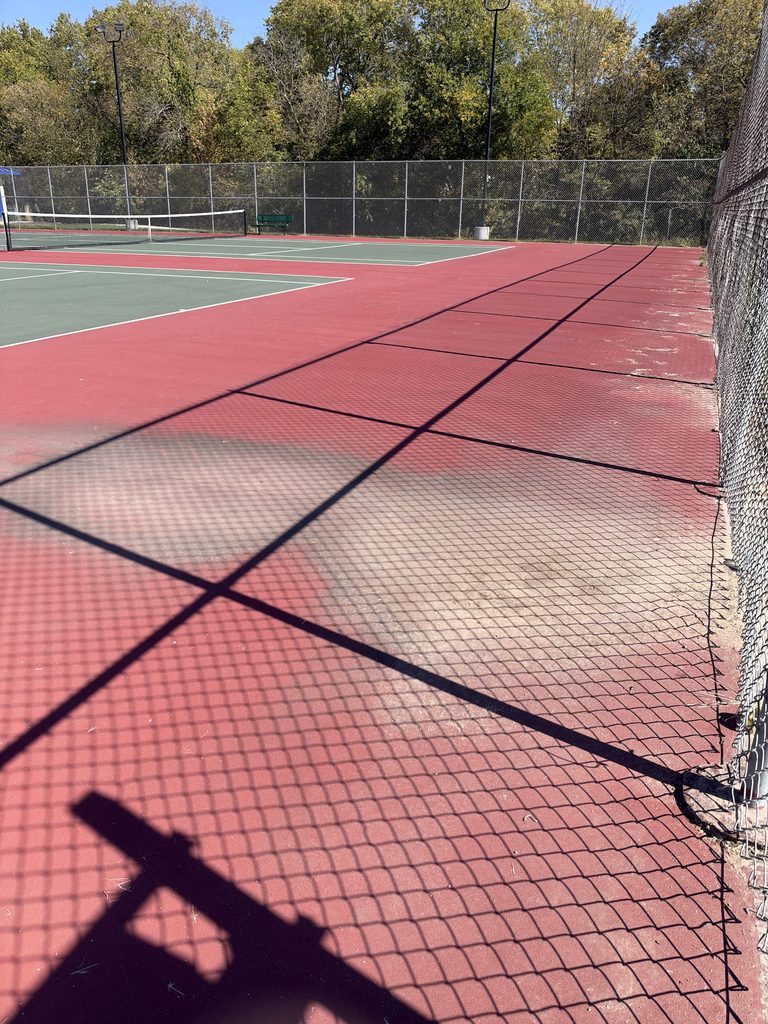
A birdbath is a low spot that holds water after it rains. We found them at most of the parks, including on courts that had been resurfaced recently.
The worst site had 7 to 8 birdbaths over 3 feet across. Others had water pooling along the edges from poor drainage, and one court was collecting runoff from the hillside behind it.
Standing water does more than make the court unplayable after a storm. It soaks into cracks, freezes, and makes them bigger every winter. Birdbaths need to be leveled with patch binder before resurfacing, not just painted over.
How it should be built: ASBA guidance calls for hard courts to slope 0.83% to 1% in a single plane, so water sheets off one side instead of collecting. That’s about an inch of fall every 10 feet. Enough to drain, not enough for players to notice.
The fix: Flood the court, then mark every spot still holding water after the rest has dried. Those areas get filled with patch binder and rechecked until they drain. The industry rule of thumb: if the standing water can cover a nickel, it isn’t fixed yet.
For water coming from outside the court, like the hillside runoff, the fix is outside the court too. Regrade the area or add a drain so the water never reaches the slab.
Why Is My Tennis Court Surface Peeling?
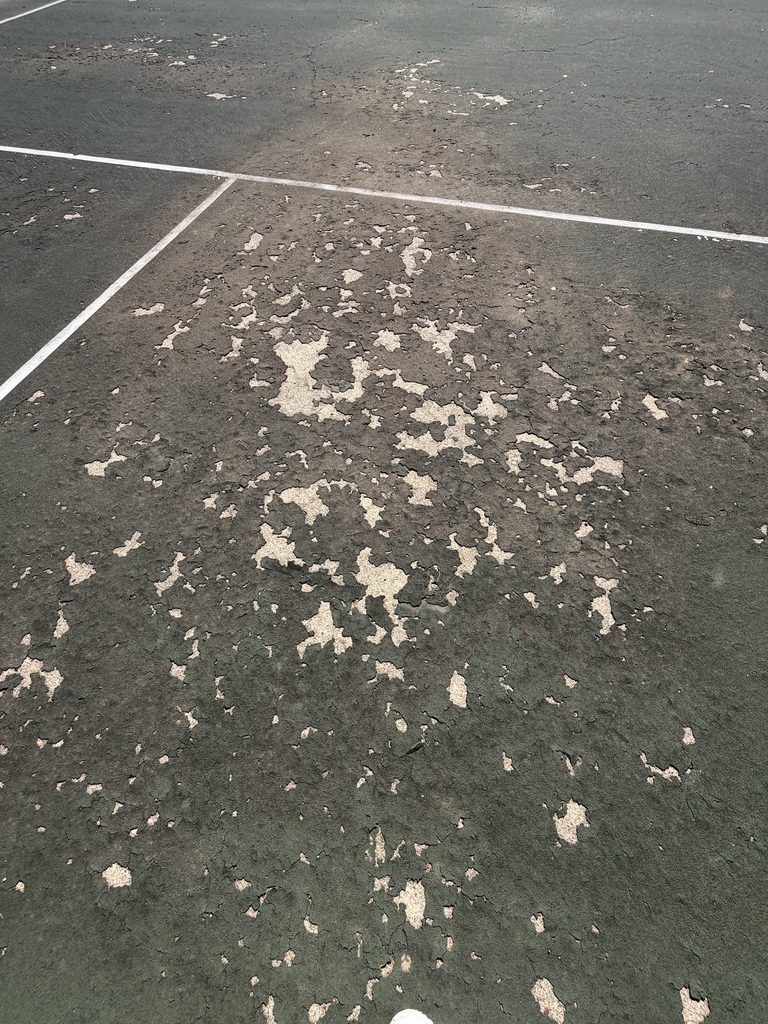
Peeling almost always comes back to adhesion: the coating never bonded to the concrete properly. We saw it at several parks, and at two sites it was severe.
- At one park, the surfacing was flaking off in sheets and delaminating around the edges, down to the bare pebble concrete.
- At another, the court had multiple layers of surfacing stacked on overly smooth concrete. Each new layer was only as good as the one under it, and the one at the bottom never had a good grip.
You can’t fix peeling by adding another coat on top. The right fix is to grind back to clean concrete, acid etch so the coatings have something to bite into, and start the system over.
How it should be built: On new concrete, adhesion starts with the finish. A broom or textured finish gives coatings something to hold onto; a slick, hard-troweled finish doesn’t. Add acid etching before the first coat, a moisture check before any coating goes down, and a vapor barrier under the slab so ground moisture can’t push the surfacing off from below.
Why Is Grass Growing Through the Middle of the Court?
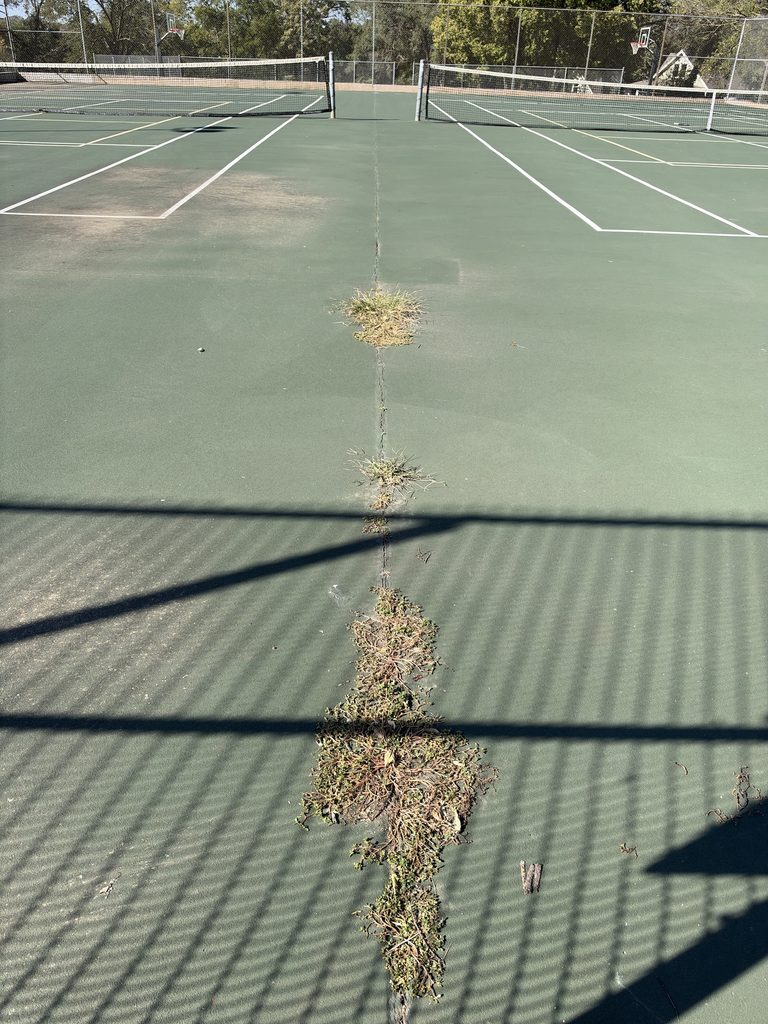
We found vegetation at the net line on almost every site, plus weeds coming up through cracks and corners.
The net line is usually where two concrete slabs meet, and that joint is supposed to be sealed with caulk. When the caulk fails, dirt and water get in, and plants follow. At one site, the center caulk just needed to be replaced. At others, plants had been growing long enough to push the joint apart.
If something is growing on your court, water is getting under it.
The fix: Pull the vegetation and kill the roots, clean out the joint, and reseal it with a flexible sealant made for sport courts. Cracks get routed, cleaned, and filled. Cracks wider than about 1/4 inch usually call for a fabric crack repair system instead of filler alone.
How it should be built: On new courts, post-tension concrete keeps cracks tight from day one, so roots have nowhere to get in. If you must do a rebar court, consider putting down a vapor barrier.
What Does a Bad Crack Repair Look Like?
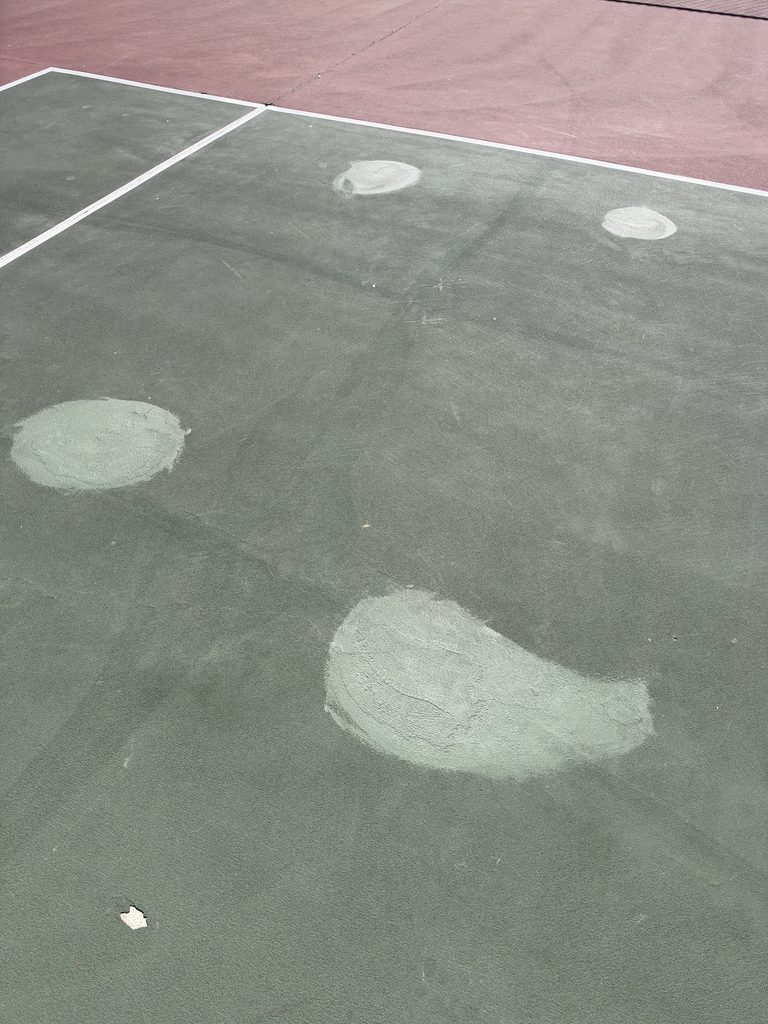
A good repair disappears into the court. A bad one leaves a bump, a ridge, or a ring you can see from the drone.
At several parks, earlier crack repairs and patches had been left sticking up instead of being smoothed flush with the surface. On one court you could see the circles where patches were never buffed out. It’s a small thing until a ball hits one and takes a bad bounce.
How it should be done: Every patch gets feathered out and ground flush with the surface around it, then checked with a straightedge before any coating goes on. If you can still see the repair after the color coats, it wasn’t finished.
Can You Resurface a Tennis Court Over Cracked Asphalt?
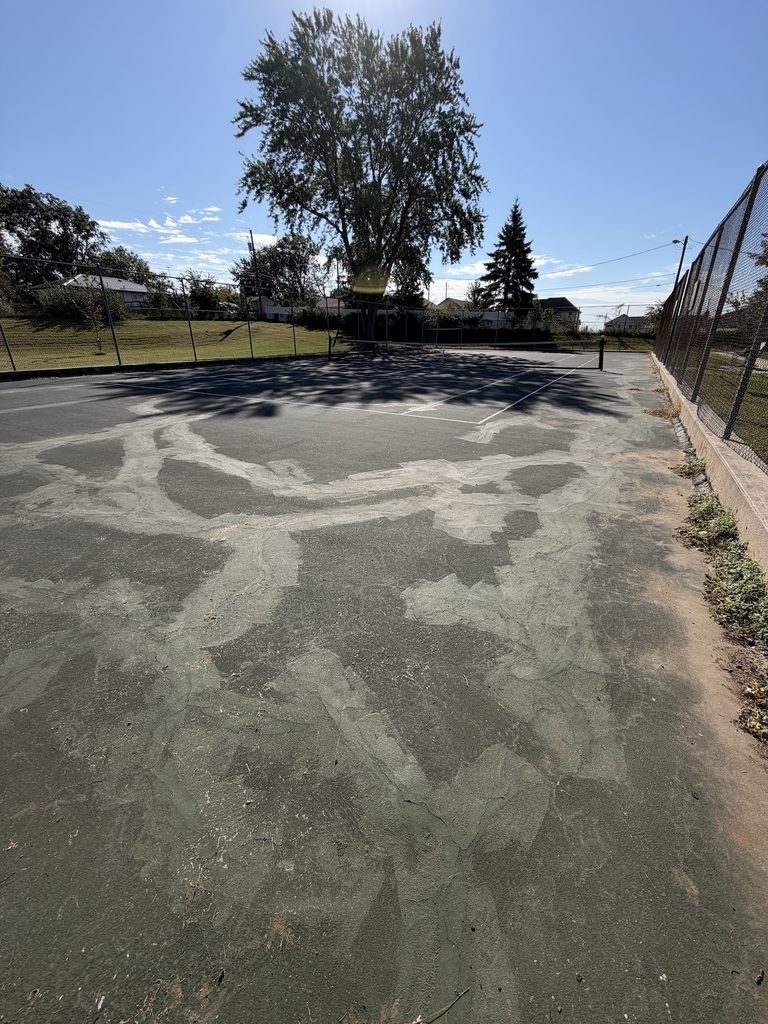
You can, but the cracks will come back. The lowest-graded site in the city was the only one on an asphalt base, and it showed.
It had heavy reflective cracking, meaning the cracks in the asphalt kept telegraphing up through every layer of surfacing put on top. Add extensive patches, multiple large birdbaths, mud and pooling around the edges, and rusted, heaving fence posts, and you’ve got a court that needs more than paint.
Resurfacing a court like this buys time. It doesn’t fix the base.
The fix: It depends on how far gone the base is.
- Moderate cracking: A fabric crack repair system bridges the cracks so they’re less likely to reflect back through the surface.
- Widespread cracking plus drainage problems: An asphalt overlay or a full rebuild.
- A court you want to last for decades: Tear it out and build post-tension concrete.
Painting over it is technically an option, but not recommended.
Does Recently Resurfaced Mean a Court Is in Good Shape?
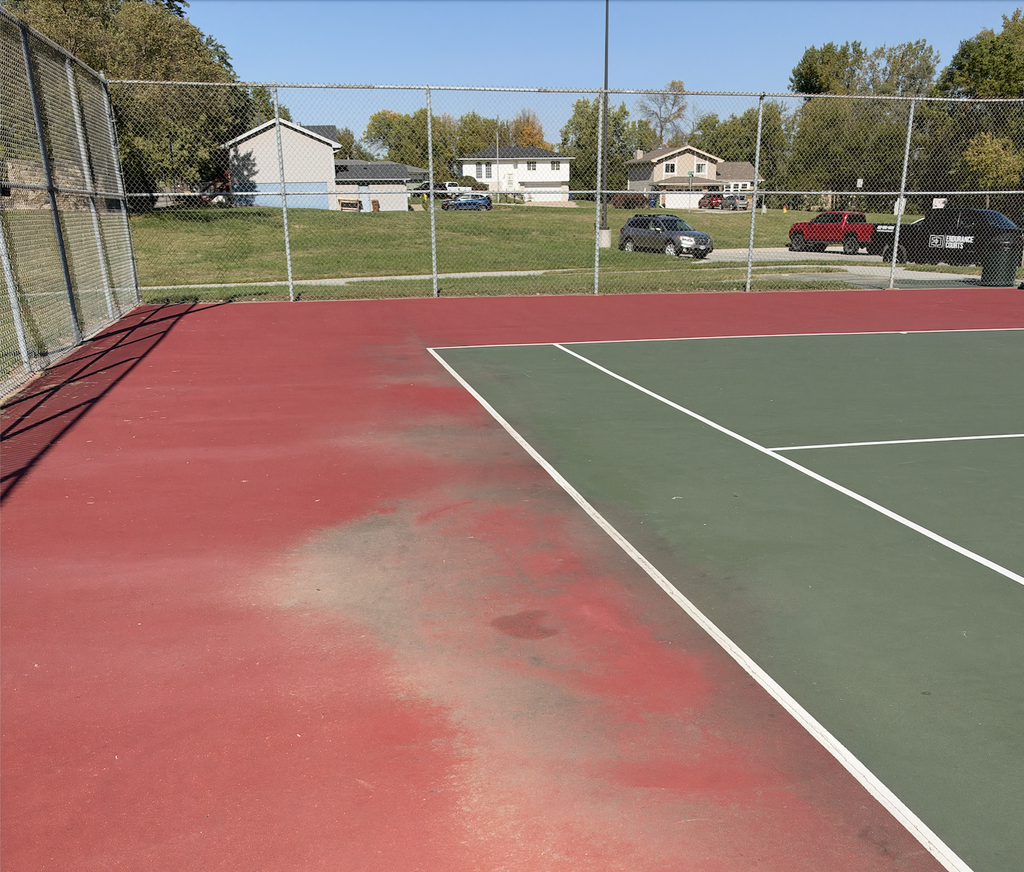
Not necessarily. Our top-graded sites had all been surfaced recently, and they still had issues:
- Shallow birdbaths and low spots
- Peeling that pointed to a possible bonding problem
- Hairline cracks already showing in the surfacing
- Patches that were never buffed flush
- Heaved net posts
New color makes a court look great from the parking lot. The problems show up when you walk it, especially right after it rains.
The fix: A resurfacing bid should include the prep, not just the color. Before any coating goes down, the contractor should flood the court and fix birdbaths, repair cracks and grind patches flush, check bonding and moisture, and inspect the net posts and footings. If a bid just says “resurface courts,” ask what’s included.
What Should a City Check Before Resurfacing Its Tennis Courts?
If you manage public courts, walk them yourself (ideally the day after a rain) and look for:
- Net posts: Are they leaning, rusted, or sitting higher than the court around them?
- Standing water: Where does it collect, and how big are the puddles?
- Peeling or flaking: Is the surface coming off down to bare concrete?
- Plants: Is anything growing at the net line, in cracks, or in the corners?
- Old repairs: Can you see patches or ridges from where earlier cracks were filled?
- Base type: Is it concrete or asphalt? Asphalt courts with heavy cracking need a different repair method.
Need Your Courts Assessed?
Endurance Courts inspects, builds, and resurfaces tennis, pickleball, and basketball courts across Nebraska and Iowa. Call 402-590-5600 or shoot us an email at build@endurancecourts.com


Leave a Reply